As warehousing operations are pushed to become more efficient within limited timeframes, automation is gaining importance across storage- and distribution-oriented markets. With 78% of warehouses worldwide still unautomated and the market forecast to grow at ~10% CAGR between 2024 and 2029, warehouse automation is entering its most consequential phase of adoption. Value capture is shifting away from hardware toward integration depth and software. Within the technology stack, AMRs are growing at ~30% CAGR, set to become the largest single category by 2028, driven by a deployment model that for the first time makes automation economically viable for the mid-market.
From Labor Shortage to Software Stack: What Is Reshaping the Market
The warehousing industry has increasingly been forced to move more volume with fewer workforce. According to a survey by Modern Material Handling, 66% of warehouse managers in 2025 expect labor shortages to become a major operational challenge within the next two years. At the same time, end-consumer delivery expectations continue to compress from several days to one or two, while same-day, or even hourly, delivery is rapidly emerging as the next standard. Additionally, the size of the e-commerce market continues to grow rapidly, given the expected CAGR of ~6% between 2026 and 2030.
Against this backdrop, the warehouse automation market has entered a new phase of expansion. From AS/RS to AMRs, and from warehouse drones to automated sorting and conveying systems, a wide range of technologies are automating many of the physical processes inside warehouses. On the other hand, solutions such as warehouse management systems (WMS) and the adoption of AI, cloud, and IoT technologies are rapidly increasing the level of automation across the digital processes.
The breadth of this technology landscape raises a more fundamental strategic challenge. The question for operators and capital allocators is no longer whether to automate, but where in the technology stack value is being captured today, which segments are growing fastest, and what the rise of autonomous mobile robots means for the competitive structure of the market going forward.
The following analysis addresses those questions. The technology scope covers physical automation (AS/RS, AMRs/AGVs, conveyors and sortation, automated picking, palletizing/depalletizing), the software layer (WMS/WES/WCS, fleet management, vision and safety systems), and integration and services. The analysis draws on market sizing data, penetration rate projections, competitive landscape and technology mapping, operator benchmarks, and regional AMR deployment data from our warehouse automation case study.
Market Outlook: Growth Trajectory, Penetration and Geographic Headroom
Following more than a decade of steady expansion, the market has entered an acceleration phase with the beginning of 2020s. Global revenues increased by roughly 56% between 2020 and 2024 (CAGR: ~11.8%) and are projected to grow by approximately 64% from 2024 to 2029 (CAGR: ~10.4%), reflecting sustained strong expansion over the decade rather than short-term investment cycles. On the other hand, automation penetration remains comparatively low, signalling a significant long-term headroom. In 2020, only about 17% of warehouses worldwide had implemented some form of automation; by 2029, this share is expected to reach 30%, leaving a substantial portion of facilities still largely manual.
Market headroom is further supported by the continued expansion of the global warehouse footprint, which has increased by approximately 14–15% between 2020 and 2025 (CAGR: ~2.8%). Even as adoption rises, the absolute number of non-automated sites remains large, highlighting the scale of unaddressed potential across industries and warehouse sizes.
Geographically, demand is concentrated but gradually diversifying. The United States, China, and Germany together account for more than half of global automation demand, supported by an intense ecosystem of OEMs and system integrators. In the upcoming years, growth momentum is expected to shift toward Asia-Pacific, particularly South and Southeast Asia, where rapid e-commerce expansion and ongoing logistics infrastructure investment are accelerating the need for automation solutions.
Within this strong market expansion environment, the critical questions remain what solution segments and technology adaptations will drive this growth trend and what factors will shape the competitive landscape.
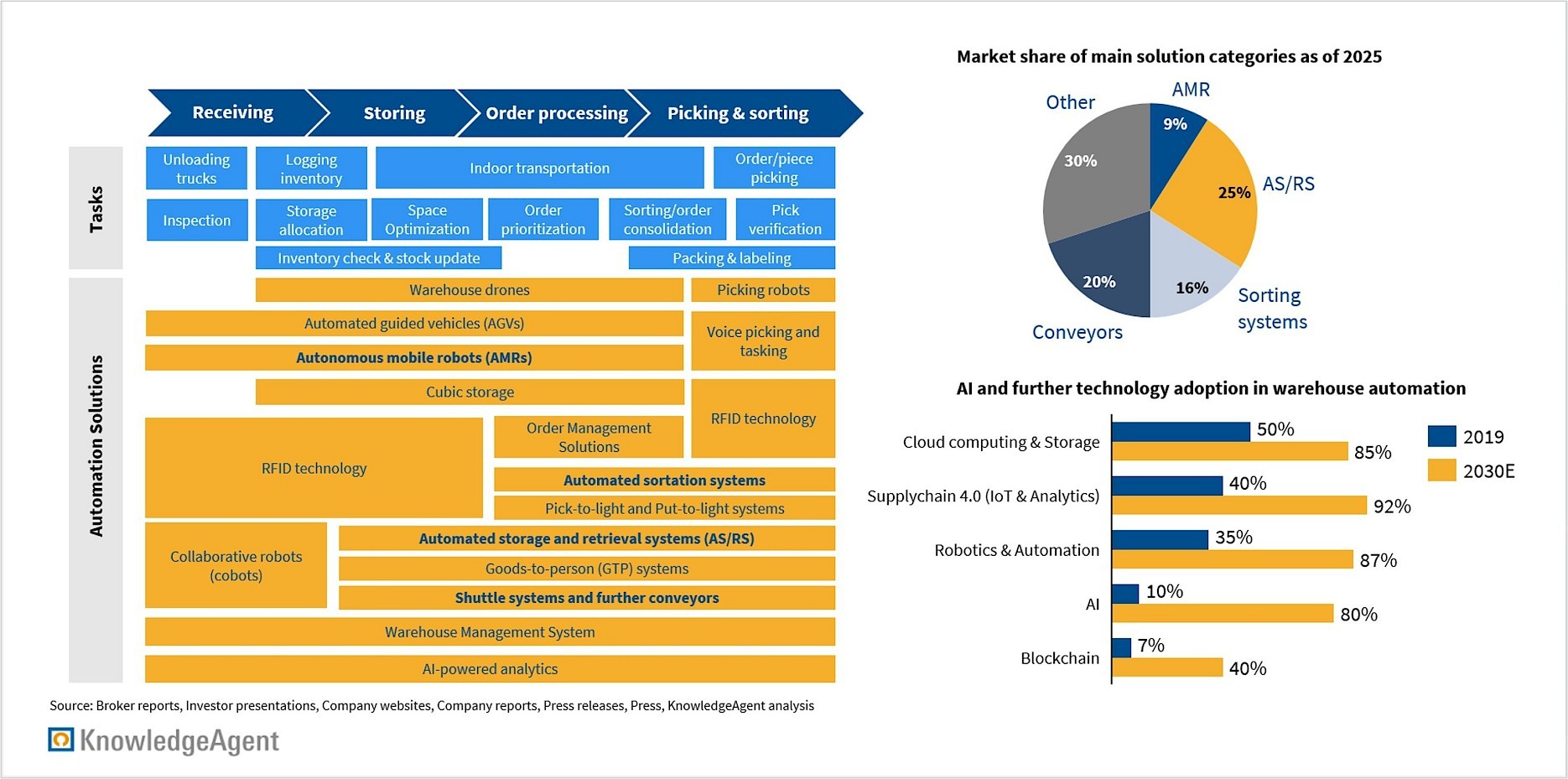
Graph 1: Technology landscape across the warehousing cycle
How Value Is Distributed Across the Technology Stack
Automation technologies now cover the entire warehousing cycle, from receiving and storing through order processing, picking and sorting, to shipping. As of 2025, the market share of main solution categories reflects the current state of that coverage: AS/RS accounts for the largest share at 25%, followed by conveyors at 20%, sorting systems at 16%, AMRs at 9%, and other solutions collectively at 30%.
The software layer is growing rapidly alongside the hardware. AI adoption in warehouse automation is projected to increase from 10% of facilities in 2019 to 80% by 2030. Supply Chain 4.0 technologies (IoT and analytics) are on a similar trajectory, moving from 40% adoption in 2019 to an expected 92% by 2030. Cloud computing and storage, already at 50% penetration in 2019, is forecast to reach 85%. These are not incremental upgrades; they represent a structural shift in where operational leverage sits within the automation stack, from hardware throughput toward software-driven orchestration, real-time decision-making, and fleet management.
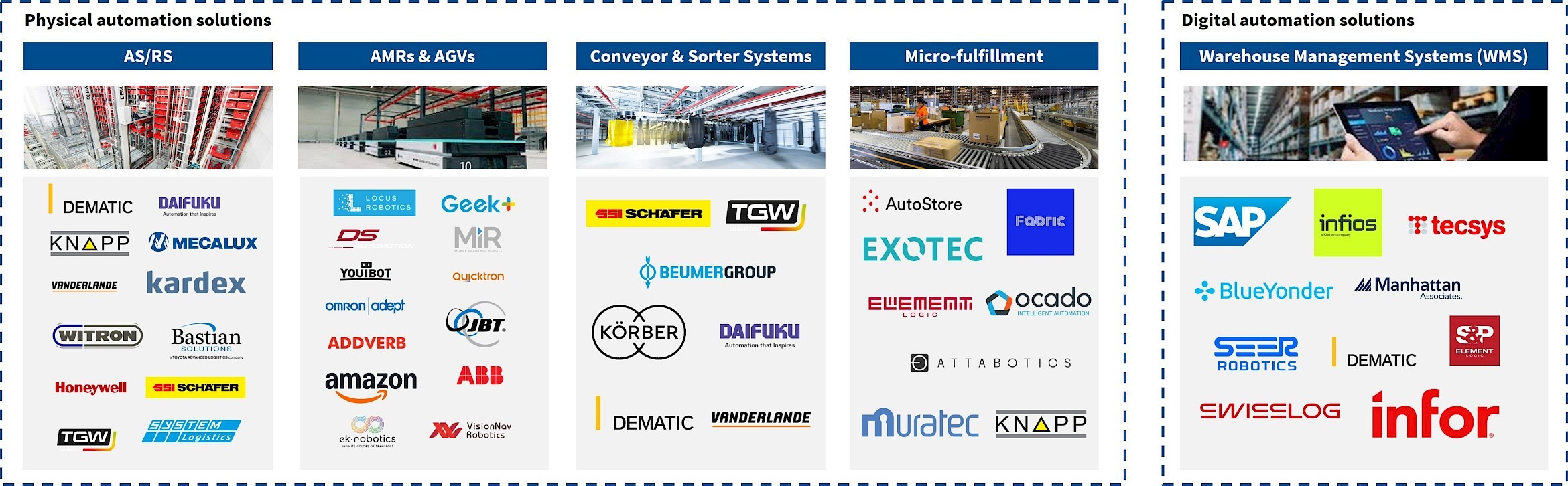
The commercial implication is that technology breadth alone is no longer a sufficient differentiator. The top 20 players already account for almost 50% of total market revenue globally, not because they cover the most technology segments, but because they can integrate hardware, software, and services into coherent end-to-end solutions and demonstrate measurable operational outcomes across the full warehouse cycle. Smaller, specialized players continue to drive innovation in modular and robotics-focused automation, but the market structure increasingly rewards those with scaling capability, integration expertise, and a global service network.
Graph 2: In-depth industrial knowledge – main automation providers by application
How Automation Changes Warehouse Economics
Beyond growth rates and the technology adaptation, the strategic relevance of automation lies in its measurable impact on operating economics:
- Labor productivity increases structurally: AMR-supported and goods-to-person workflows typically can double or triple the pick rates, primarily by reducing non-value-adding travel time. Empirical studies indicate that mobile robotics can reduce picker walking time by roughly 20%. In high-SKU environments, this allows operators either to reduce full-time equivalent (FTE) requirements or to absorb volume growth without proportional labor expansion.
- Space utilization improves materially: Based on the best practices reported by several case studies, high-density AS/RS and robotic storage systems can increase storage capacity per square meter up to 80% compared to conventional racking. In high-rent or urban regions, this translates directly into avoided expansion capex and improved asset productivity.
- Process quality and overall efficiency increase: Automated workflows often reduce picking error rates significantly, lowering return handling costs and downstream service disruptions. Automated and robotics-enhanced warehouses frequently report remarkable throughput increases. Amazon’s internal experience displays a useful example of productivity improvements with robotics, including order throughput increases of 25–50% in some facilities.
- Return rates across best practice cases: The average ROI for the early adopters of warehouse automation is estimated at 20% within the first two years. Well-structured projects frequently achieve payback within 24 months.
Collectively, these effects shift warehouse cost structures away from variable labor intensity toward scalable, technology-enabled throughput capacity.
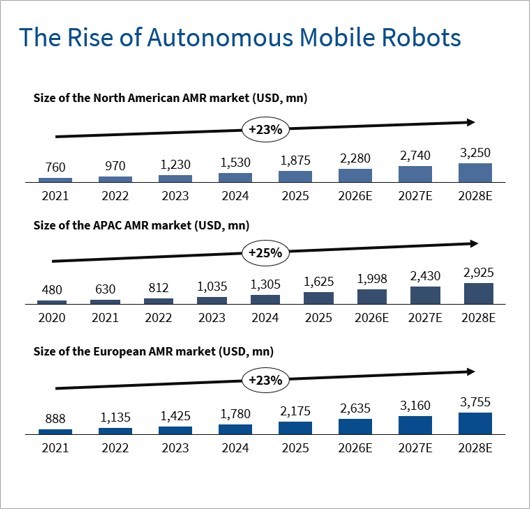
Graph 3: AMR market size and growth rates by region
AMRs as the Primary Growth Engine
Within the broader warehouse automation market, AGVs and AMRs represent the fastest-growing segment within the warehouse automation market and are expected to become the largest technology category by 2028, with CAGR (2021-2028) approaching 20-25% across regions.
AMRs benefit from low infrastructure requirements, rapid deployment timelines, and incremental scalability. While they do not match traditional AS/RS solutions in peak throughput, they are particularly well suited to small and mid-sized warehouses and brownfield environments, where flexibility and speed of implementation are critical decision factors.
Enhancements in safety standards and navigation technologies further strengthen the AMR value proposition by reducing accident risk and easing labor constraints.
The competitive landscape for AMRs is highly dynamic. Chinese vendors account for approximately half of global supply, supported by strong domestic demand and rapid commercialization cycles. Europe and North America remain core markets, while Asia-Pacific represents the fastest-growing region. AMR revenues in the region are projected to approach approximately USD 3 billion by 2028, representing a 25% CAGR between 2020 and 2028.
Case Study: Warehouse Automation Market Overview
The KnowledgeAgent team has prepared a concise case study providing an in-depth analysis of the warehouse automation market, covering:
- Market growth dynamics and forward-looking projections
- Historical total addressable market (TAM) by warehouse size, penetration rates, and future outlook
- Regional growth patterns and geographic expansion trends
- Comprehensive overview of technologies across the warehousing value chain, including market shares of key segments
- Competitive landscape assessment, including leading vendors by application, number of players by segment and subsegment, and competitive positioning of major market participants
- Structural demand drivers supported by the most relevant industry metrics
- AMR segment highlight: regional market development, core demand drivers, and an illustrative overview of global players
Building on this analysis and additional market insights, the full warehouse automation case study is available for download.
Contact our Transport & Logistics team to learn more about our expertise and explore how we can support your market intelligence and strategic decision-making needs.